 PLCU India
Use UPI for a Binance P2P order only if that method is actually offered and permitted for your verified account and the specific order. Keep payment within the documented process. Acquiring USDT does not prove that a PLCU swap or purchase will be available afterwards.
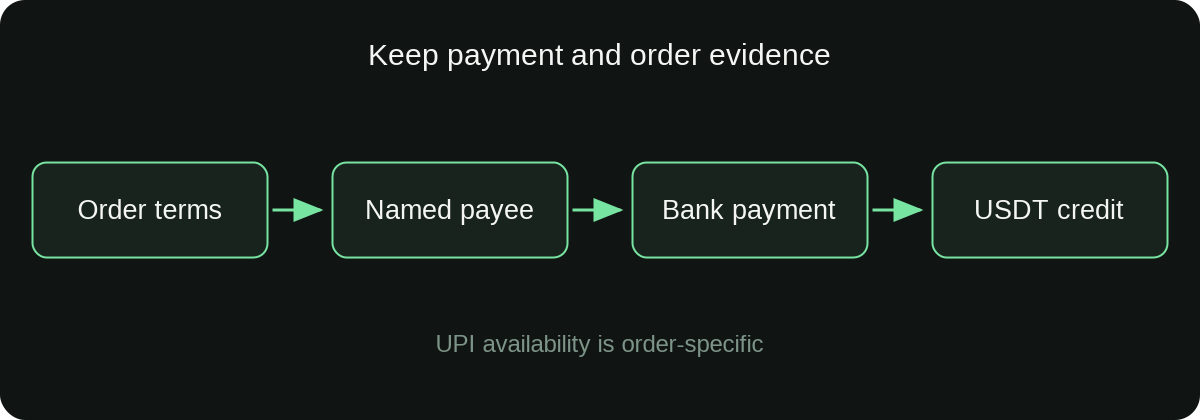
Check the destination before acquiring the funding asset
If the purpose of buying USDT is a PLCU purchase, establish the next market and receiving network first. Otherwise you may complete a payment and discover that the target route is unavailable. An attractive P2P rate cannot repair a missing second step.
Keep a separate record for the funding decision: INR amount, USDT quantity, payment method, order limits and intended next destination. The PLCU purchase guide explains how that record fits into the full cost calculation.
This article explains P2P mechanics and safeguards conditionally. It does not promise that UPI is currently shown to every Indian account or that a particular merchant, rate or payment bank will be available when you open the app.
Understand the two systems involved
A P2P order coordinates a crypto transaction through the platform's process. The rupee payment moves through the selected banking or payment method. These are connected stages, but they do not share one universal transaction status.
A bank transfer reference proves something about the payment; the order record proves something about the P2P process. Keep both. A pending bank payment does not necessarily mean the platform has received confirmation, and a platform chat message does not prove bank settlement.
Binance's P2P user transaction policy addresses verified-name payments and platform procedures. Read the order terms as well. Do not use a friend's bank account or substitute a beneficiary supplied outside the order.
Inspect an offer before opening the order
Compare the rate, permitted amount range, payment window and counterparty conditions. Review any platform-provided history or completion information in context; it reduces neither the need for correct payment details nor all counterparty risk.
Use the payment method actually stated in the order. If the seller asks for a different destination in a private app, stop and use the platform's support process. Do not assume that a similar account name or a QR code sent later belongs to the verified counterparty.
The cheapest offer may include conditions you cannot meet. An order is not suitable if it requires information you cannot truthfully provide, a payment method you do not control or an off-platform arrangement.
Pay the exact order through the stated method
After checking the order, use the beneficiary details shown in the legitimate process. Verify the name and amount in your bank or UPI app before authorising payment. Do not share the PIN, OTP or device access with the seller.
NPCI's fraud-awareness guidance explains that entering a UPI PIN authorises a payment, not receipt of money. A supposed refund or verification request that asks you to scan and approve a debit should not be mistaken for receiving funds.
Save the payment reference immediately. Mark the platform order as paid only according to its rules and the actual payment state. If the bank debits you but the order has a problem, use the documented appeal process rather than cancelling blindly or paying again under pressure.
Reconcile before moving USDT elsewhere
After completion, confirm the USDT balance and which account holds it. Funding and spot balances can be distinct internal records. An internal transfer, where supported, is different from an on-chain withdrawal to a self-custody wallet.
Before withdrawing, identify the exact receiving network and address. A USDT ticker is not enough to select a chain. Keep the withdrawal fee and destination minimum in the cost calculation. Do not move the stablecoin into an unverified wallet route merely because the P2P order succeeded.
| Stage | Evidence to retain |
|---|---|
| Offer selection | Rate, limits and payment conditions |
| Order creation | Order ID and stated beneficiary |
| Rupee payment | Bank or UPI reference and actual status |
| Crypto receipt | Completed order and credited balance |
| Later transfer | Asset, network, destination and transaction ID |
These records make the sequence understandable if a bank, platform or adviser asks about the source of funds.
Be prepared for payment problems
A screenshot can be altered, and a notification can be mistaken for a confirmed credit. Binance's proof-of-payment scam guidance explains why actual account verification matters. This is especially important if you later sell crypto through P2P.
For a buying dispute, preserve the order conversation and banking evidence. Do not provide extra crypto or a private “release fee” to resolve it. Contact support from inside the platform and your bank through its official channel as appropriate.
Escrow is a useful mechanism but not a guarantee against all payment-origin, identity or later banking issues. Do not portray P2P as risk-free simply because a platform mediates the crypto side.
Costs and tax records do not end with the order
Calculate the effective rupee cost per USDT using the actual amount received. Add any subsequent transfer or trading costs separately. A nominal rate in an advertisement may not describe the cost of the complete route.
Keep acquisition records even if the stablecoin is held briefly. A later crypto conversion can matter for Indian reporting. The tax article explains why the bank-withdrawal date is not the only relevant date and why TDS is not automatically the final liability.
Avoid promises that one payment method makes a transaction invisible or tax-free. Bank and platform records can remain relevant regardless of how short the holding period is.
When not to proceed
Do not proceed if the method is unavailable to your account, the beneficiary cannot be verified, the order requires a third party's account or the intended PLCU route remains unresolved. You can stop at research without creating a payment obligation.
If you have already paid and an issue develops, use the order's support and appeal route rather than abandoning the evidence. Paying a second time or switching to private chat can make the situation harder to resolve.
Frequently asked questions
What if my bank payment is pending as the order timer expires?
Preserve the payment reference and use the platform's support or appeal process for that order. Do not assume that paying again, cancelling or moving to private chat will safely resolve the first payment.
Can a saved merchant offer be used after its rate changes?
Use the conditions of the actual order you create. A bookmarked advertisement is not a permanent commitment to a price, amount range or payment method for future transactions.
How should I evaluate a rate quoted as INR per USDT?
Divide the actual rupees paid by the USDT actually credited to compare effective cost. Keep later transfer charges separate, and do not invert the rate accidentally when comparing two offers.