 PLCU India
PLC Ultima is a crypto project associated with PLCU, but its historical coin names and chains have changed. Identify the exact asset before using any price, wallet or buying guide. PLCU, PLCUC, PLCUX and ULTIMA must not be treated as interchangeable balances.
Start with the distinction that affects your money
A coin name tells you less than its network, ticker and history. An old screenshot showing PLCU may describe a different asset from a current page using the same letters. This matters when you compare prices, send coins or respond to a migration request: the wrong identification can invalidate the entire next step.
MEXC's January 2023 migration notice explains that the original PLCU would be renamed PLCUC, while a new PLCU would use a new chain. That historical event is not an instruction to send coins anywhere today.
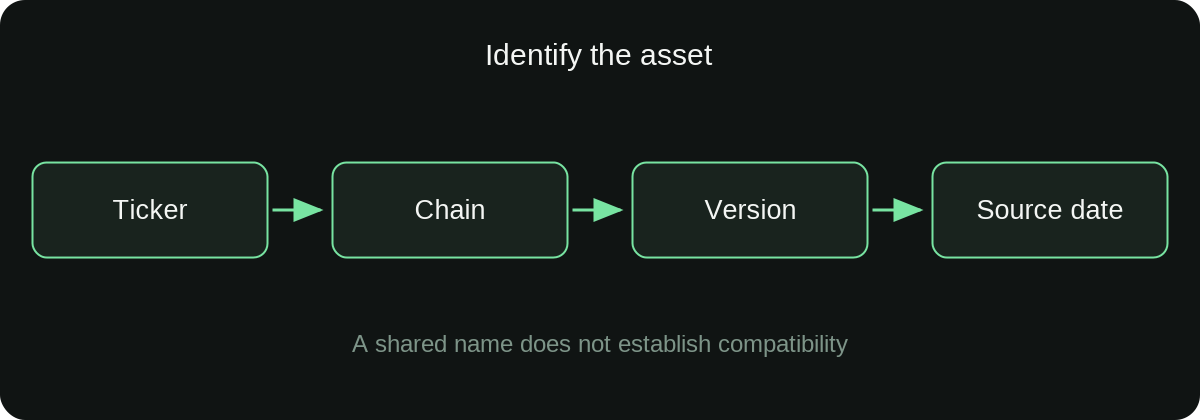
Before researching an investment, write down four fields: the full asset name, ticker, network and source date. If one is missing, resolve it before attaching a rupee value. A familiar logo is not a substitute for those fields.
What the project originally described
The project's English whitepaper discusses PLC Ultima in a 2022 context. It names Alex Reinhardt as founder and describes a Litecoin-based blockchain, wallet and minting ecosystem. Those are statements in a historical project document, not independent verification of every product claim or proof of present functionality.
The distinction between a coin and an ecosystem is useful here. A coin is the asset being transferred. A wallet provides a way to manage access. A farm or paid product may introduce a separate contract, lock or reward arrangement. Owning the coin does not automatically establish rights under every product sold under a related brand.
For an Indian beginner, the practical question is not whether the ecosystem sounds broad. It is whether the particular service you want is operational, accessible to you and documented clearly enough to use without relying on a promoter.
PLCU, PLCUC and other names
Use the following table as an identification aid, not as a current exchange rate or migration offer.
| Name encountered | What you should establish |
|---|---|
| PLCU | Whether the page means the post-migration asset or a historical use of the ticker |
| PLCUC | Whether your balance and destination refer to the Classic chain |
| PLCUX | The specific product, chain and reward denomination being discussed |
| ULTIMA | Its own network and documentation; a shared word does not prove compatibility |
| PlatinCoin or PLC | The exact asset and any documented connection, rather than an assumed rename |
Do not infer a conversion right from shared branding or personnel. A relationship between projects, a previous migration and a new swap offer are three different claims requiring different evidence. A person saying “they are all the same company” has not established the chain your coins use.
What a beginner can verify without buying
You can examine project documents, exchange announcements, software repositories and available explorer information before creating a funded position. The public PLC Ultima Core repository is one research starting point. The existence of source code does not itself prove a particular wallet binary, website or service is safe.
Build a simple evidence file. Save the document date, the claim you are testing and the source that could establish it. For a wallet claim, look for exact asset support. For a market claim, look for a trading pair and current service status. For a reward claim, obtain the terms that determine who pays, what is received and when it becomes transferable.
An unresolved item should remain unresolved. Replacing missing evidence with a confident answer from a chat group does not make the route usable. You can finish your research with a decision not to proceed.
A connection is not an investment guarantee
Founder biographies, international events and community membership can explain a project's marketing history. They do not establish liquidity, solvency, enforceable customer rights or regulatory permission in India. Equally, a disputed claim should not be converted into an unsupported allegation about a person.
If you are researching the connection with PlatinCoin, separate a documented historical association from the much stronger assertion that every balance can be exchanged. Ask for the applicable terms and exact assets. Never give a supposed migration agent your private keys to prove ownership.
See the supply and unlock guide for the difference between a coin balance, a promised release and circulating supply. Each affects the interpretation of a valuation.
A coin balance is also not automatically an equity stake in the companies named in a presentation. Check the actual rights rather than assuming corporate ownership from ecosystem branding.
Your first useful research outcome
A good starting outcome is a completed identity record, not a purchase. It should identify what you own or intend to buy, where its chain can be checked, which wallet supports it and whether an exit route is verifiable. This makes later decisions less dependent on slogans such as “new generation” or “limited supply”.
If your goal is simply to compare crypto projects, evaluate the same evidence categories for each. A project should not receive a lower standard of scrutiny because its terminology is unfamiliar. The PLCU versus Bitcoin comparison offers a way to organise that decision without claiming that either asset guarantees returns.
Keep learning and paying separate. You do not need to activate a paid product merely to understand what an asset is. Someone who will explain basic mechanics only after receiving funds is not providing the evidence you need at this stage.
Frequently asked questions
Why do two documents use the same ticker but different full names?
A symbol is not a permanent global identifier. Keep both documents and compare their dates, chain references and migration context before deciding whether they describe the same holding.
Is a product account number the same as my blockchain address?
Usually they serve different purposes. The account identifies a relationship with a service, while an address identifies a network destination. Locate the actual receive details rather than substituting one for the other.
What should I save if an old statement shows only PLCU?
Preserve the statement date, issuer, account reference and any transaction IDs. Those details give the provider a basis to clarify the version without you disclosing wallet recovery material.