 PLCU India
Use the explorer for the exact PLCU chain and inspect the transaction ID, status, destination and amount. A blockchain transfer, exchange credit and Farm reward entry are different records. None should be used as a substitute for the others when investigating missing funds.
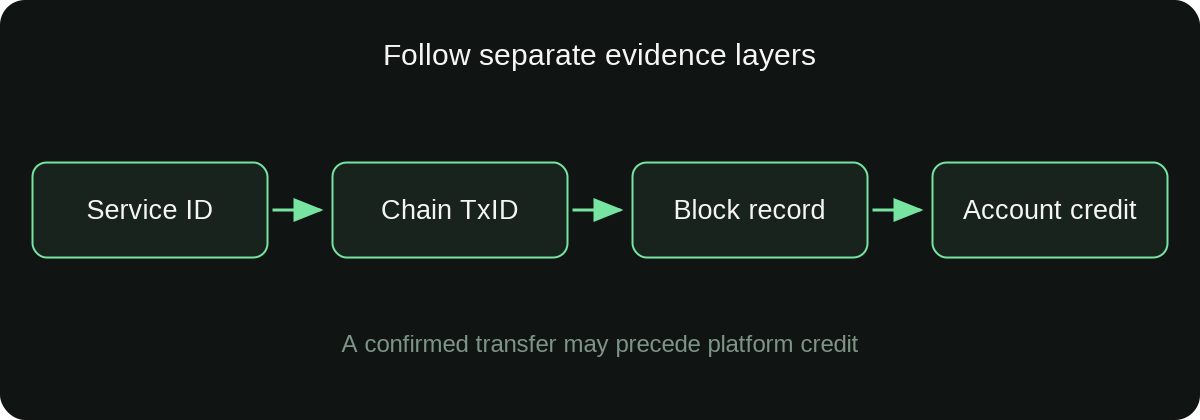
Identify what kind of record you have
An exchange withdrawal number is often an internal reference. A transaction ID identifies a network transaction. A product dashboard can show a reward or release entry without establishing that coins were sent to your wallet. Start by determining which record you possess.
If you have only an internal reference, ask the sending service for the blockchain transaction ID and network through its verified support process. Do not search a random explorer by typing the service's order number and conclude that nothing happened when no result appears.
For the PLC Ultima explorer, plcultima.info is a project-linked starting point. Its interface requires JavaScript. If a tool or browser cannot display the data, that limitation is not evidence that the chain has stopped or that a particular transfer failed.
The correct explorer depends on asset identity
A historical PLCU balance may involve Classic rather than the newer coin. Consult the identity guide before choosing an explorer. A result found on the wrong chain cannot settle what happened to the intended asset.
Follow an explorer link from an appropriate primary source instead of a sponsored search result or unsolicited message. A fake explorer can display invented confirmations. Check the domain and compare the record with an independent source where one is available.
Do not paste a seed phrase, private key or wallet backup into an explorer. Public transaction information is sufficient for a lookup. A site demanding recovery material to display a transaction is asking for something unrelated to the legitimate task.
Read the transaction as a record of a specific action
The important fields answer distinct questions. A transaction ID locates the event; a block or confirmation status indicates its place in chain history; outputs identify where value went. Some details depend on the chain and explorer implementation, so do not force an Ethereum-style reading onto every network.
| Field or record | Question to ask |
|---|---|
| Transaction identifier | Is this the same event supplied by the sender? |
| Status and block | Has it been included, and what confirmation evidence is shown? |
| Destination outputs | Does the intended receiving address appear? |
| Amount and asset | Is the relevant quantity actually directed there? |
| Timestamp | Is it the event you are investigating? |
| Source reference | Does the sending service link this ID to your request? |
A successful lookup is not proof of your ownership of every address shown. Likewise, a large transaction total may include multiple outputs rather than a single payment to your account. Attribute amounts carefully.
Why an apparent return output may not be a refund
On chains using a transaction-output model, a transaction can spend existing outputs and create both payment and change outputs. A change address can belong to the sender even if it differs from the address you expected to see. Address appearance alone is not enough to infer a refund or an additional fee.
The PLCU Core repository provides a technical research starting point, but reading a repository is not a shortcut to attributing an individual transaction. For an account problem, focus on the receiving output and the service's records before drawing broader conclusions.
If the explorer presents an aggregate “sent” amount, inspect its definition. A summary can count transaction structure differently from your personal cash flow. Keep the exact output relevant to your deposit separate from the entire transaction total.
Separate chain confirmation from exchange credit
An exchange may require confirmations, apply a minimum or review a deposit before crediting it. Those conditions are part of the receiving service. A transfer's presence on the chain does not prove that the platform has completed its account processing.
Build a timeline with the withdrawal request, network inclusion and account credit. If the first event exists but no network ID is available, contact the sender. If the network record reaches the correct destination but the account remains uncredited, the receiving service is the relevant next point of enquiry.
The transfer guide explains which destination details should have been recorded. Do not fix a suspected version mismatch by sending more of the same asset. Establish the receiving platform's recovery policy instead.
Export history for your own records
Save the transaction ID, chain, relevant addresses, quantity and observation date. Keep a copy of the withdrawal or product record that connects the public transaction to your account. A block explorer alone may not identify why you received coins.
For INR accounting, attach acquisition or disposal evidence and a documented valuation method separately. Explorer dollar values can be estimates based on changing feeds. They should not silently replace completed trade prices or professional tax treatment.
When a service lets you export data, preserve the original file as well as your working spreadsheet. Avoid altering the only copy to make categories fit. A traceable record is more valuable than a polished table whose original inputs are lost.
What an explorer cannot establish
An explorer cannot guarantee a trading venue will buy your coins, prove the legitimacy of a promoter or certify an investment's value. It can help verify events on a chain within the accuracy of its indexing and presentation.
It also cannot reverse an ordinary confirmed transfer simply because you have the transaction ID. Be sceptical of a recovery agent who requests an upfront payment to “cancel the hash”. Public transaction evidence supports investigation; it does not confer signing authority.
A useful outcome is a clear statement of what is known: the transaction exists on the specified network, a particular output reaches a particular address, and the receiving account state is either confirmed or still unresolved. That is more informative than a broad claim that the money is safe or lost.
Frequently asked questions
Can two explorers show different confirmation counts?
They can update at different times or index different chain states. Compare the block and update status before interpreting the difference as wrongdoing, and preserve the observation time for each reading.
How should I handle an explorer timestamp shown without a timezone?
Check its display settings or documentation before comparing it with a bank or service record. Retain the original timestamp and label any conversion rather than guessing which timezone the interface uses.
Can I share a CSV export instead of screenshots for an enquiry?
A relevant export can be easier to inspect, but review it for unrelated addresses, personal details and hidden columns. Keep the original privately and share only the fields necessary for the specific issue.